Bedding-In Mountain Bike Brakes: Why It Matters for Power, Control, and Confidence
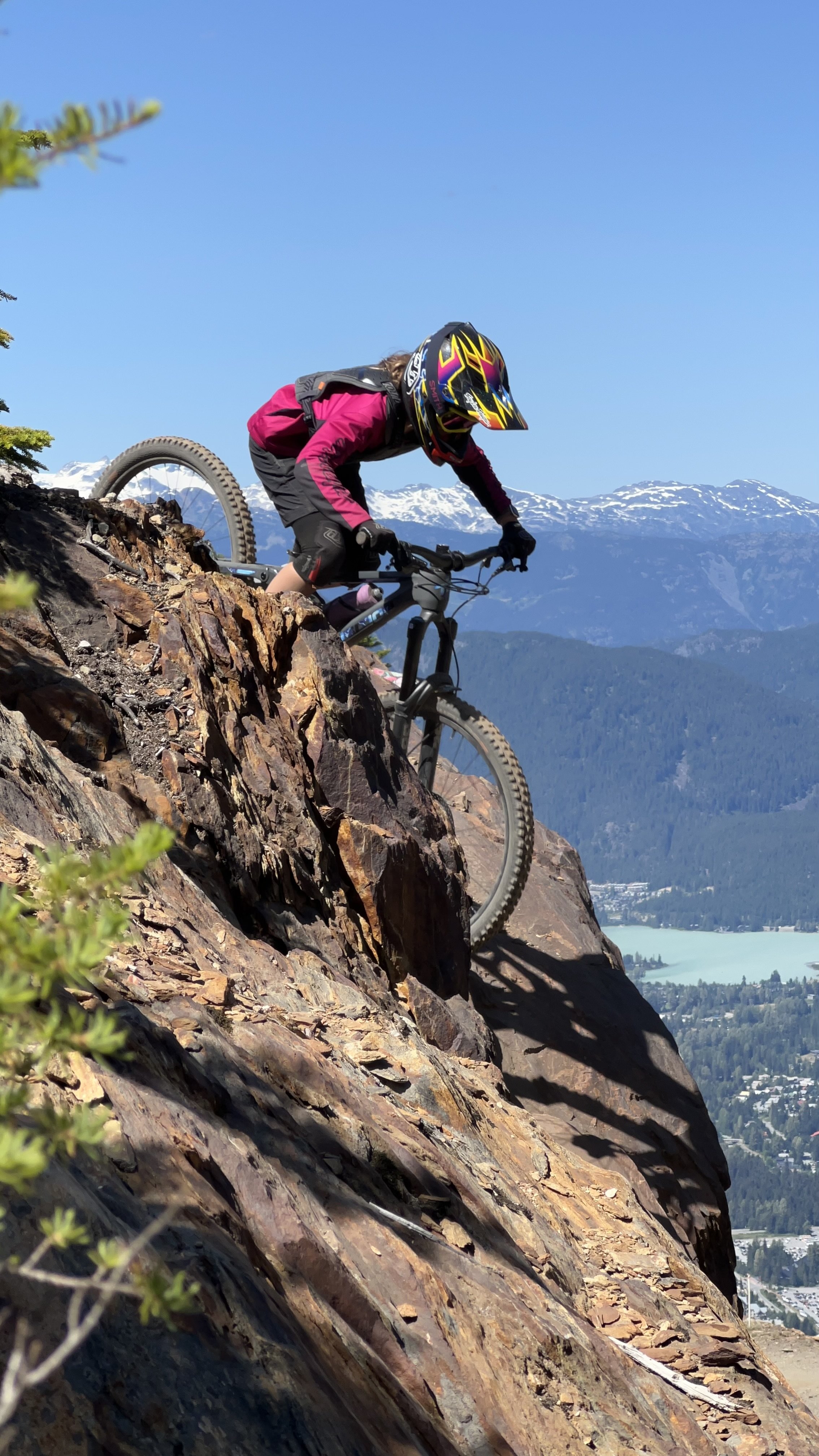
Better brakes = better confidence!
If you ride in Whistler, strong and reliable brakes are not optional. Between long descents, steep technical terrain, and fast bike park laps, your braking system needs to deliver consistent stopping power and control every time you pull the lever.
Yet one of the most common issues we see during Whistler mountain bike lessons and skills coaching at ZEP is riders struggling with weak or noisy brakes. In many cases, the problem isn’t the brake itself — it’s that the brakes were never properly bedded in.
At ZEP Mountain Bike Coaching, we check riders’ bikes all the time before lessons, and improperly bedded brakes are one of the most common mechanical issues we see. Fortunately, the fix is simple once you understand the process.
Let’s break down what bedding-in brakes actually means and how to do it properly.
What Does “Bedding-In” Brakes Mean?
Bedding-in is the process of transferring a thin layer of brake pad material onto the rotor surface.
When done correctly, this creates a consistent friction layer that allows the brake pads and rotor to work together efficiently.
Without this transfer layer, the pads and rotor do not mate properly, which leads to:
Poor braking power
Inconsistent lever feel
Brake squealing
Glazing of the pads
In simple terms: bedding-in allows your brakes to reach their designed performance.
You might also hear riders call this process:
Breaking in brakes
Burning in brakes
They all refer to the same process of creating that friction layer between pad and rotor.
Many modern systems, including those from Shimano, rely on this pad transfer layer to deliver the smooth modulation and consistent power riders expect on steep terrain.
Step-by-Step: How to Bed-In Your Mountain Bike Brakes
Bedding in brakes takes about 5–10 minutes and can be done on a quiet road or smooth trail.
Step 1 — Accelerate
Ride up to about 20–25 km/h (12–15 mph). A long, quiet road with a slight downhill gradient and dry, smooth surface is ideal… but watch out for traffic!
Step 2 — Firm Controlled Stop
Gradually apply one brake firmly until you slow to walking speed.
Avoid fully locking the wheel.
Step 3 — Repeat
Perform 10–15 gradual slowdowns.
Step 4 — Build Heat
Increase braking force slightly during later stops.
The goal is to generate heat cycles gradually that transfer pad material onto the rotor.
Step 5 — Cool Down
Ride for a minute without braking to allow the system to cool.
You should feel the brakes getting stronger and more consistent during the process.
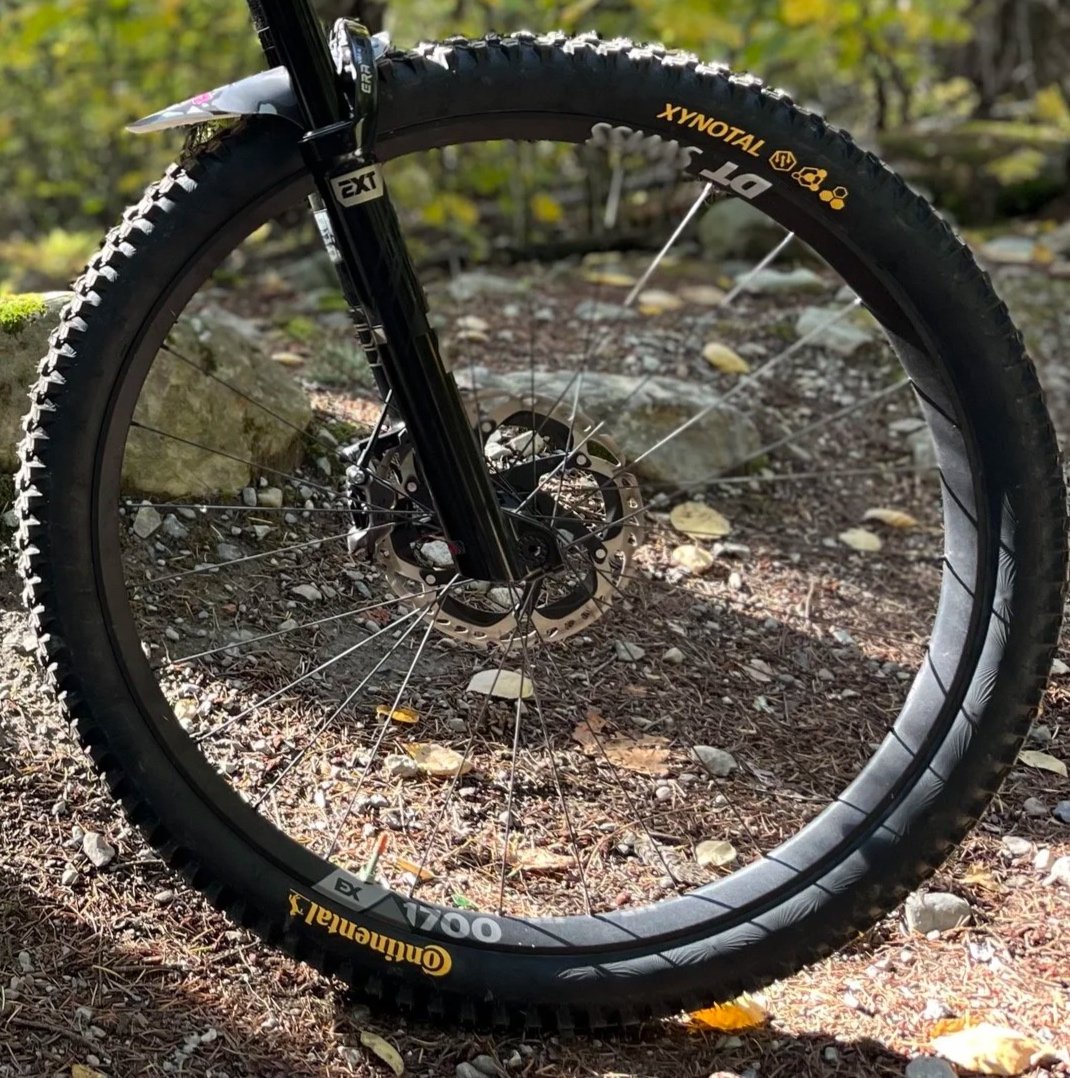
One of the advantages we find with Shimano brakes is how easy they are to bleed and maintain, and the consistent, reliable power once the brakes are bed in properly.
Taking a little time to set the brakes up with bedding in, plus brake lever position can make a world of difference to the feel and control.
Types of Mountain Bike Brake Pads
Brake pad material affects braking feel, durability, and heat resistance.
Resin / Organic Pads
Characteristics:
Quiet operation
Strong initial bite
Less rotor wear
Downside:
Wear faster
Can overheat on long descents
These are common on many trail bikes and provide a smooth, predictable feel for everyday riding.
Metallic / Sintered Pads
Characteristics:
Excellent heat resistance
Longer lifespan
Consistent performance in wet conditions
Downside:
Slightly louder
Slightly less initial bite
These are a popular choice for bike park riding and long descents, especially in places like Whistler.
Semi-Metallic Pads
A blend of organic and metallic compounds.
Characteristics:
Balanced performance
Good heat management
Moderate durability
Many riders choose these as an all-around option for trail riding but in Whistler and the Sea-to-Sky, many riders choose metallic pads for all out power and reliability on long descents.
Why Bedding-In Matters (Especially in Whistler)
On steep trails, braking consistency directly affects rider confidence.
During Whistler mountain bike skills clinics, riders often assume their braking technique is the problem when the real issue is mechanical.
Unbedded brakes can create:
Weak stopping power
Inconsistent braking feel
Noise and vibration
Increased hand fatigue
Once properly bedded, riders usually notice:
Stronger braking power
Better modulation
Less noise
More control on steep terrain
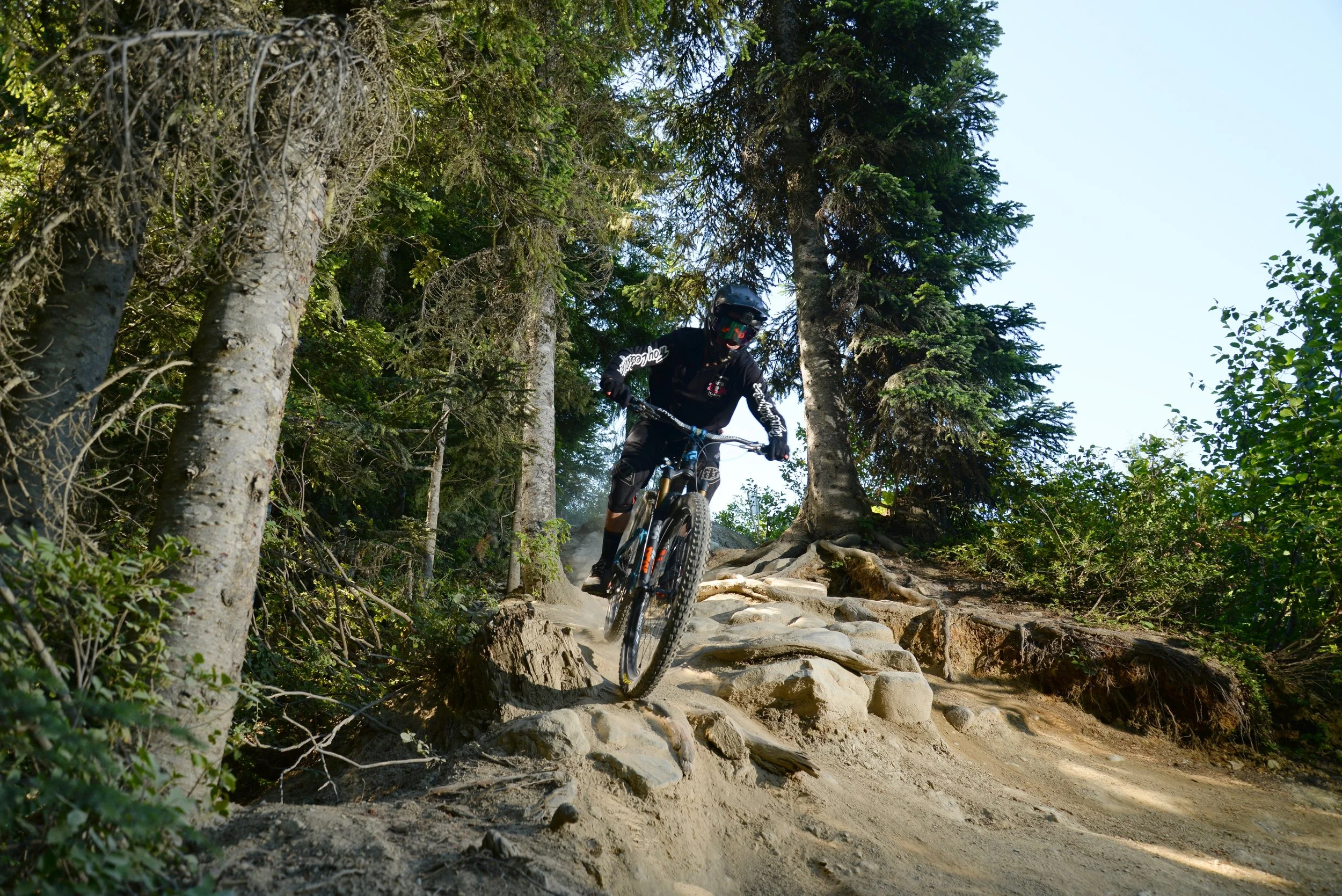
Confidence on steep terrain starts with proper bike setup. How your brakes are bedded in—and the pads you run—has a big impact on braking feel and power. Think of good setup as “free skill” for your riding.
Symptoms of Brakes That Are Not Properly Bedded
If you notice any of these signs, your brakes likely need bedding in:
Loud squealing
Weak braking power
Brakes that feel grabby or inconsistent
Rotor discoloration or glazing
Excessive lever force required
These symptoms are extremely common with brand-new bikes or recently replaced brake pads.
Common Bedding-In Mistakes
Even experienced riders sometimes skip the process or do it incorrectly.
Skipping the process entirely
New pads and rotors need bedding-in.
Overheating the brakes immediately
Long hard descents before bedding can glaze pads.
Locking the wheel repeatedly
This prevents even pad transfer.
Doing only one or two stops
The process requires multiple heat cycles.
When Should You Re-Bed Your Brakes?
You should repeat the bedding process anytime you:
Install new brake pads
Install new rotors
Clean contaminated rotors
Replace the entire brake system
It’s a quick step that dramatically improves brake performance.
A Simple Tip We Share in ZEP Lessons
Before heading into a big day of riding — especially in the Whistler Bike Park — take five minutes to bed in new brakes.
It’s one of the easiest ways to improve:
Bike control
Rider confidence
Overall safety
At ZEP Mountain Bike Coaching, we believe the best riding experience comes from combining great technique with well-prepared equipment.
If you want to improve your riding even further, check out our Whistler mountain bike lessons, skills clinics, and private coaching sessions, designed to help riders progress faster and ride with more confidence on Whistler’s world-class trails.